
Bathroom Renovation Ideas on a Budget That Actually Save Money
Find bathroom renovation ideas on a budget that cut costs without cutting corners, from paint and lighting to tile, storage, fixtures, and smart DIY work.
When I started collecting bathroom renovation ideas on a budget for our Greenville, South Carolina house, I made the same mistake most homeowners make: I priced the pretty parts first. The vanity, tile, faucet, and mirror looked manageable until I added plumbing, disposal, waterproofing, and the small parts nobody photographs. A sensible budget for a modest bathroom refresh is often $2,500 to $6,000 if you do some work yourself. A full professional renovation can easily reach $12,000 to $25,000.
My approach is less exciting and more useful. Separate cosmetic work from water-management work, spend money where leaks or daily wear are involved, and write down every purchase. Measure twice, cut once, write it down.
Start With a Three-Tier Bathroom Budget
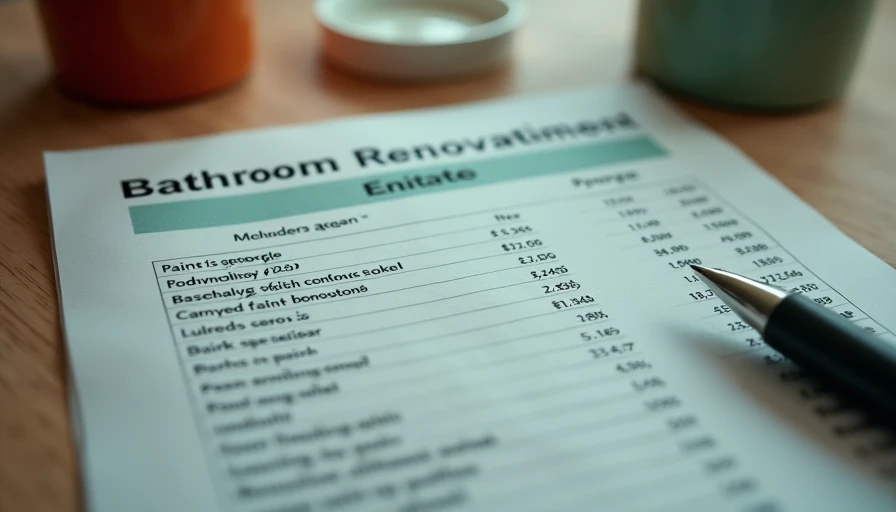
Before demolition, divide the project into three columns: must fix, worth improving, and nice to have. A soft subfloor, leaking valve, failed exhaust fan, or missing shower waterproofing belongs in the first column. Fresh paint and a new mirror belong in the third. This simple sorting exercise keeps a $300 cosmetic project from becoming a $9,000 impulse renovation.
For our hall bathroom, I set a working budget of $4,200. I reserved $900 for unknowns, including damaged framing and old supply lines. The planned costs were $650 for a stock vanity, $450 for a toilet, $300 for lighting and electrical parts, $500 for paint and trim, $700 for flooring, and the remainder for hardware, caulk, disposal, and permits. The contingency was not permission to upgrade. It was protection against opening a wall and finding a problem.
Price the entire room before buying anything. A $1,100 vanity can require a $250 faucet, $120 drain kit, new shutoff valves, filler strips, and a different mirror. A $300 vanity with standard dimensions may leave enough cash for a better exhaust fan or professional plumbing connection.
High-Impact Surface Changes for Less
Paint is still one of the strongest bathroom renovation ideas on a budget, provided the walls are dry and sound. I spent about $65 on a bathroom-rated satin paint, primer for patched areas, and a quality angled brush. Choose a washable finish, repair loose drywall paper, and do not paint over active moisture. If the ceiling has brown spots, find the leak before touching the roller.
Changing the light fixture can make an old bathroom feel newer in an hour. A simple three-light vanity fixture typically costs $50 to $180. Select a fixture that fits the existing electrical box and provides even light across the face rather than a bright spotlight above the mirror. Turn off the breaker, verify the circuit is dead, and stop if the wiring is damaged or confusing.
A framed mirror is another strong value. Instead of paying $500 for a designer mirror, I have used a $70 to $150 plain mirror with a simple wood frame sealed against bathroom humidity. Replacing yellowed caulk around the tub, repainting the door, and installing matching towel hooks can change the room for under $250.
Save on Tile Without Creating a Leak
Tile is where cheap bathroom renovation ideas on a budget can become expensive mistakes. Tile itself is not waterproof. The shower assembly behind it needs a reliable waterproof membrane, properly treated corners, and a compatible drain system. If the shower is already leaking, cosmetic tile over the problem is just a delayed demolition bill.
For a dry bathroom floor, sheet vinyl or luxury vinyl plank can be practical alternatives to ceramic tile. Materials often run from $2 to $6 per square foot, compared with roughly $3 to $15 for tile before setting materials and labor. Vinyl also avoids grout maintenance and can be installed quickly over a suitable, level subfloor. Follow the product instructions around the toilet and tub, and do not trap moisture underneath.
If tile is the goal, use it selectively. A tiled shower floor and a painted bathroom may look more finished than a fully tiled room while saving several hundred dollars. Standard subway tile, simple square tile, and a single grout color usually cost less and create fewer layout problems than large-format tile with multiple trim pieces. Rent a tile saw rather than buying one for a single job, but budget for a quality blade and extra tile for cuts and breakage.
Choose Fixtures by Function, Not Packaging
A new toilet can improve comfort and cleaning without turning the room into a showroom. Measure from the wall to the center of the floor bolts before ordering; older bathrooms do not always use the current rough-in dimension. A midrange toilet in the $200 to $450 range is usually a better value than the cheapest model, especially if replacement parts are easy to find.
For faucets and shower trim, look for common cartridge sizes and metal connection points. I avoid buying a faucet solely because it photographs well. The $90 faucet with an unusual cartridge can cost more over five years than a $160 model with readily available repair parts. Replace corroded shutoff valves while access is easy, but remember that moving supply lines or drains is no longer a simple fixture swap.
An exhaust fan is a boring purchase that earns its place. A properly sized, quiet fan helps remove humidity and protects paint, trim, and framing. The fan should vent outdoors, not into an attic. If the existing duct disappears into insulation, this is a good point to hire an electrician or HVAC professional rather than guessing.
DIY Work Worth Attempting
The safest savings usually come from work that is slow, visible, and easy to inspect. Homeowners can often handle demolition, painting, cabinet assembly, mirror installation, hardware, baseboard, and some flooring. I remove cabinets carefully instead of swinging a sledgehammer, because preserving a wall saves patching time. I also label every plumbing part before disconnecting it; my phone photos have prevented more than one wrong reassembly.
Plumbing connections deserve more respect. Replacing a faucet is different from relocating a drain. Electrical fixture swaps are different from adding a new circuit. Waterproofing a shower is different from caulking a tub edge. When the job involves concealed pipes, a new circuit, structural framing, gas, or a shower pan, bring in a qualified professional where needed and pull required permits.
My most expensive lesson was rushing the vanity installation. I set the cabinet before checking the floor slope, then spent an afternoon shimming it and correcting the countertop gap. The mistake cost about $45 in materials and half a day. Five minutes with a level would have prevented it.
Where the Money Adds Real Value
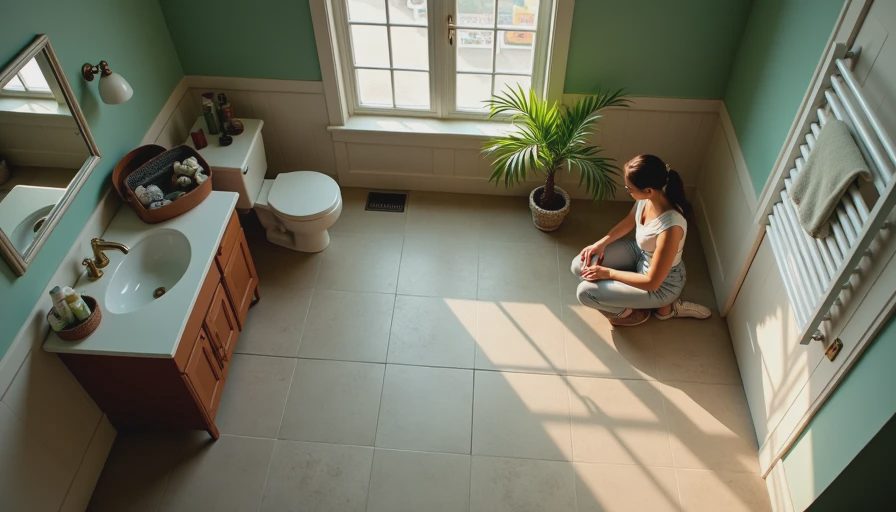
As a former appraiser, I look for improvements that solve problems first. Good lighting, sound flooring, working ventilation, clean caulk lines, a useful vanity, and a modern toilet generally help more than an oversized decorative mirror or imported tile. Buyers notice condition before they notice a brand name.
Storage is another practical upgrade. A recessed medicine cabinet can be excellent, but cutting into a wall requires checking for wiring and plumbing. A $30 over-toilet shelf is cheaper, though it can look cluttered. My preferred middle option is a wall-mounted cabinet with doors, plus two towel hooks near the shower so wet towels are not thrown over the vanity.
Keep the existing layout whenever possible. Moving a toilet or shower can involve floor access, drain slope, venting, concrete work, and permits. Leaving plumbing in place can save $1,500 to $5,000 or more, depending on access. Spend that money on waterproofing, ventilation, and durable surfaces instead.
A Practical Weekend-by-Weekend Plan
Weekend one is measuring, photographing, and shopping. Record room dimensions, wall locations, toilet rough-in, vanity width, door swing, and every fixture connection. Create a spreadsheet with estimated cost, actual cost, tax, delivery, and return deadline.
Weekend two is removal and repair. Shut off water, protect the hallway, remove the mirror carefully, and inspect the subfloor and walls. Do not hide mold, rot, or active leaks behind new material. Correct the cause first.
Weekend three is paint, lighting, flooring, and cabinet installation. Work from the ceiling down and keep a clean area for parts. Weekend four is trim, caulk, accessories, and final testing. Run the shower, flush the toilet repeatedly, inspect supply connections with a dry paper towel, and check the fan vent.
The best bathroom renovation ideas on a budget are not about making every item cheap. They are about refusing to pay for work twice. Keep the layout, buy standard-size components, do the finish work carefully, and reserve cash for the hidden problems. That strategy will not produce the flashiest before-and-after video, but it gives you a bathroom that works, lasts, and stays inside the spreadsheet.
Comments
No comments yet — be the first to share a thought.