
Kitchen Renovation Budget: A Realistic Way to Plan Every Dollar
Kitchen renovation budget planning starts with realistic costs, trade-offs, and a 15% reserve. See my spreadsheet method for cabinets, labor, and surprises.
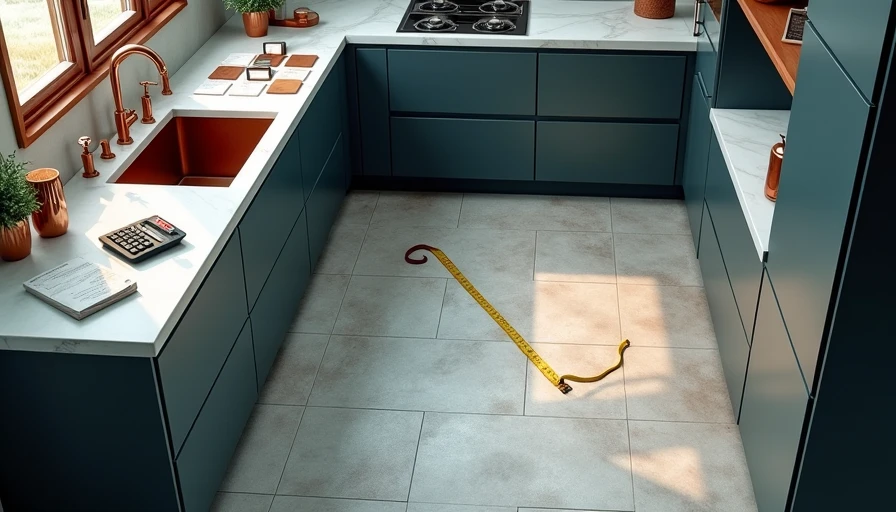
A kitchen renovation budget is not a single number you pull from a remodeling calculator and hope survives demolition. It is a working document that connects the room you want with the cash, labor, timeline, and surprises the project will actually require. When I remodeled our Greenville, South Carolina kitchen, I started with a $38,000 target. The final number was $43,760, and the gap came from a wet wall, not from the quartz countertop I had spent weeks debating.
I have renovated four houses, including two flips and our current family home, and I still make budget mistakes. The difference now is that I write down the assumptions before buying anything. That makes it easier to see what can move, what must stay, and where a cheap decision becomes expensive later.
How I Build a Kitchen Renovation Budget
Start with the room's scope instead of its finishes. A light update with paint, hardware, a new sink, and replacement appliances can land around $8,000 to $18,000. A moderate renovation with semi-custom cabinets, new counters, flooring, lighting, and professional installation often runs $25,000 to $50,000. Moving walls, plumbing, gas lines, or electrical service can push a larger project beyond $60,000.
Those are planning ranges, not promises. Greenville labor prices are different from Atlanta or Chicago, and a compact kitchen can cost more per square foot than a large one because every trade still has a minimum charge. I use three columns in my spreadsheet: planned cost, committed cost, and actual cost. Planned is my guess, committed is the signed quote or purchase receipt, and actual includes every delivery fee, permit, rental, and return trip.
For my project, cabinets were planned at $14,500 and finished at $15,240. Labor was planned at $9,000 and finished at $10,850 after the electrician had to replace an unsafe junction box. Those small differences are why I do not treat a contractor's rounded estimate as the entire kitchen renovation budget.
Where the Money Usually Goes
Cabinetry is commonly the largest line item, often consuming 25% to 35% of a full renovation budget. Stock cabinets can keep the purchase price near $6,000 to $12,000 for a modest kitchen, while semi-custom and custom options can climb from $15,000 to $30,000 or more. The expensive choice is not automatically the better choice. A well-installed stock cabinet with good hardware can look more convincing than a poorly planned custom layout.
Counters, installation, and backsplash together may take another $5,000 to $12,000. Laminate is still practical and can cost far less than quartz or natural stone. Quartz gave me the low-maintenance surface I wanted, but the quote increased after the fabricator measured an angled wall and added a waterfall edge. That was a design choice, not an emergency, so I removed it before signing.
Appliances deserve their own line rather than a vague allowance. A range might cost $700 to $3,500, a refrigerator $1,200 to $4,000, and a dishwasher $500 to $1,500. Do not forget trim kits, water lines, ventilation, delivery, haul-away, and installation. A $2,000 appliance package can become $2,500 quickly when the surrounding work is included.
The Hidden Costs That Break the Plan
The most useful kitchen renovation budget includes a contingency reserve of at least 10% to 15%. I prefer 15% when the house is older than 30 years or the project includes demolition. In our kitchen, the reserve covered subfloor repairs, two additional recessed lights, and a replacement shutoff valve. Without it, those necessities would have gone on a credit card.
Demolition also has costs beyond swinging a hammer. You may need a dumpster, disposal fees, dust protection, temporary kitchen equipment, and a plumber for capped lines. We spent $680 before the new cabinets arrived because the old tile had been installed over two layers of plywood. Removing it took two days and filled more bags than I had estimated.
Permits and inspections should be listed before work begins. Requirements differ by location and scope, but electrical, plumbing, structural, and gas changes commonly involve permits. A permit fee is usually cheaper than correcting unapproved work during a future sale. As a former appraiser, I also know that buyers notice awkward layouts and questionable workmanship more than they notice whether a backsplash tile cost $8 or $18 per square foot.

How to Decide What to DIY
DIY labor can protect a kitchen renovation budget, but only when the task is suitable for your tools, schedule, and patience. I handled cabinet hardware, painting, demolition, floating shelves, and finish trim. I hired licensed trades for the electrical changes, gas connection, countertop fabrication, and cabinet installation. That split saved money without asking me to learn a high-consequence skill beside an open wall.
The mistake I made was assuming cabinet installation would be a simple weekend job. My floor was out of level by nearly an inch across the room, and leveling the first run took most of a Saturday. If I had not already owned a laser level, planer, and track saw, renting or buying equipment would have erased much of the labor savings.
Price your own time honestly. If a professional charges $3,000 for installation and you need four full weekends plus tool rentals, the savings may be smaller than they look. You also need a plan for mistakes. A miscut filler strip might cost $40; a miscut stone countertop can cost thousands.
A Sample Kitchen Renovation Budget
Here is the working kitchen renovation budget from my spreadsheet, rounded to make it useful rather than theatrical. Cabinets came to $15,240. Countertops and backsplash totaled $6,180. Appliances were $8,460. Flooring and shoe molding cost $2,350. Electrical and lighting came to $4,100. Plumbing was $1,250. Painting and drywall repairs were $1,600. Demolition, disposal, permits, and delivery charges added $2,080.
That subtotal was $41,260. I kept a $2,500 reserve, but the final actual cost reached $43,760 after the wet-wall repair and a replacement microwave trim kit. The project stayed manageable because I had already decided that the waterfall edge, pot filler, and decorative plaster hood were optional. Those three items could have added roughly $4,000 without improving how our family uses the room.
For a smaller kitchen, the same process works with fewer categories. Measure the cabinet run, list each appliance, request written labor quotes, and add every finish separately. Never hide installation inside a product allowance. A cabinet quote that excludes fillers, panels, crown molding, and handles is not comparable to one that includes them.
Final Checks Before You Order
Before committing, confirm the layout, appliance dimensions, door swings, outlet locations, lighting plan, ventilation route, and flooring transition. I print the elevation drawings and mark every outlet with a pencil. That caught a planned receptacle directly behind a drawer bank, saving a return visit and an annoyed electrician.
Get at least two or three quotes for specialized work, but compare scope rather than just totals. Ask whether each quote includes protection, disposal, permits, finish work, and cleanup. Schedule deliveries only after measurements are verified. Store boxes indoors, inspect panels immediately, and photograph damaged pieces before contacting the supplier.
The best kitchen renovation budget is not the one with the lowest opening number. It is the one that tells you what happens when the floor is crooked, the delivery is late, or the first design idea costs more than it adds. Measure twice, cut once, write it down. That habit kept my project within a number I could live with, and it will give your renovation a much better chance of doing the same.
Comments
No comments yet — be the first to share a thought.