
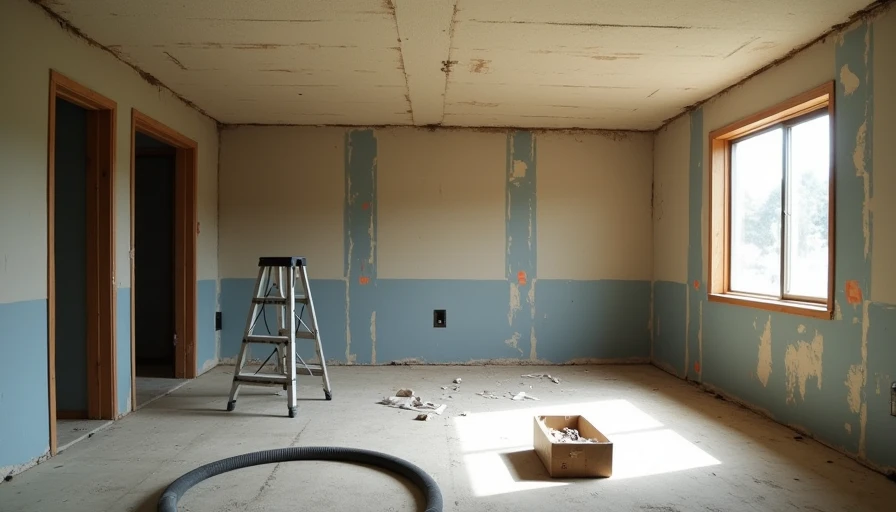
The Living Room: Popcorn Ceilings, Paneled Walls, and Day One
Day one in the living room: popcorn ceilings, 1970s paneling, and the moment the subfloor started talking back. Real budget, real mess, no highlight reel.
Day One Starts with a Stepladder and Regret
I stood in the middle of the living room on a Tuesday morning holding a stepladder that had seen better decades and a shop vac I still call Dusty Springfield. The plan was simple: knock down the popcorn ceilings, pull the dark paneling, and see what was hiding underneath. The spreadsheet said the whole room should come in under $4,200 if I did the demolition myself and only hired out the electrical check.
By lunch the spreadsheet was already lying to me.
This is the first room in the forever house. 1978 Greenville ranch, original everything that the previous owners never touched. Popcorn ceilings that had collected thirty years of dust and whatever else settles on textured paint. Dark wood paneling that made the space feel like a basement rec room from a decade I only know through photographs. Carpet that had given up sometime around 2009.
Jenna took the kids to her parents for the day. Smart woman. I put on the good respirator, taped plastic over every doorway, and told myself this would be a clean, methodical start.
It was not.
The Popcorn Ceiling That Fought Back
Scraping popcorn is the kind of job that looks straightforward on YouTube and feels like punishment in real life. The texture comes off in wet clumps that stick to everything. I started in the corner farthest from the front door, working in four-foot sections the way the manuals recommend. First hour went fine. Second hour the ceiling decided it preferred to stay attached in some places and surrender in wet sheets in others.
Halfway through the main span I hit a patch that had been painted over with oil-based paint sometime in the nineties. The scraper bounced. The ladder shifted. I said several words the kids are not allowed to hear and climbed down to re-evaluate my life choices.
By the time the ceiling was mostly bare, the plastic on the floor looked like a crime scene involving joint compound and regret. Dusty Springfield ran almost constantly. Rhonda the miter saw sat unused in the garage, judging me.
Actual time spent: six and a half hours for a room that the optimistic side of my brain had scheduled for three.
Paneled Walls and the Things They Hide
The paneling came next. Dark, grooved, installed with more nails than any wall should ever need. I started at the outlet wall, prying carefully so I wouldn’t destroy the drywall underneath. First sheet came off clean. Second sheet revealed a surprise: someone had run a telephone line and an old cable wire between the paneling and the actual wall, both of them long dead.
Third sheet exposed a vertical crack in the drywall that ran from floor to ceiling. Not structural—just the kind of settlement crack that every house this age collects—but wide enough that it would need tape, mud, and sanding before paint. The spreadsheet had a line item for “minor drywall repair: $80.” That number is now a joke I tell myself while stirring joint compound.
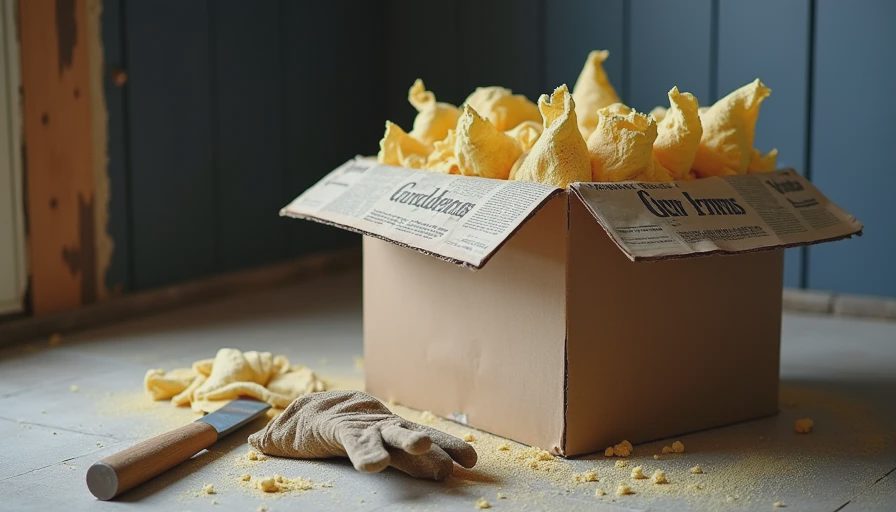
Behind the paneling on the exterior wall I found the real gift: newspaper insulation from what looked like 1947, yellowed and brittle, stuffed between the studs in places where the original builder had apparently run short of actual insulation. I bagged it carefully, labeled the bags, and added “old newspaper removal and proper insulation” to the punch list that already had seventeen other items.
The Subfloor Starts Talking
With the carpet and pad gone, the subfloor had opinions. Several boards near the front window had soft spots. Not full rot, but the kind of give that makes you stop walking and start poking with a screwdriver. Two sections needed sistering. One needed full replacement because the previous owners had apparently spilled something acidic years ago and never told anyone.
I cut out the bad sections, sistered new plywood, and screwed everything down like I meant it. The room is only twelve by sixteen, but by the time the subfloor was solid again the sun had moved all the way across the sky and my knees were filing formal complaints.
Day One Numbers (Already Wrong)
Original living-room demo budget:
Dumpster share: $180
Plastic, tape, respirator supplies: $65
Drywall repair materials: $80
Subfloor plywood and screws: $95
Labor (me): $0
Running total after day one: $412 in materials and dumpster, plus the quiet knowledge that the drywall repair line is about to triple and the insulation situation is not optional.
I updated the master spreadsheet at the kitchen table while Jenna and the kids ate the pizza I had promised them in exchange for a quiet house. The “20% buffer” column is already working overtime.
What Day One Actually Taught Me
First, popcorn ceilings always take longer than the video says. Always.
Second, paneling is a time capsule. Whatever is behind it has been waiting decades to become your problem.
Third, the subfloor will tell you the truth the carpet was hiding. Listen early.
Fourth, even a small room generates more debris than you expect. The dumpster that looked enormous on delivery already has opinions about how much more it is willing to accept.
None of this is catastrophic. None of it is surprising if you’ve done this before. But writing it down while the dust is still in my hair keeps the numbers honest and the next person who opens a wall from being quite as blindsided.
Tomorrow the drywall repair starts in earnest. Then the electrical check I already scheduled with a licensed friend who owes me a favor. Then, eventually, the part where the room starts looking like somewhere a family might actually want to sit.
Measure twice. Cut once. Write it down.
The living room is underway. The ledger is open. See you for week two when the floors finish having their say and the walls start demanding attention.
Comments
No comments yet — be the first to share a thought.