

Dining room renovation: what I spent, what I skipped, and what paid off
Dining room renovation costs, layout fixes, lighting, and paint tips from a Greenville renovator. Learn what to spend, skip, and improve for resale today.
A dining room renovation looks easy until you start pricing the little things that make a room feel finished. In my Greenville houses, this has been one of the cheapest rooms to improve and one of the easiest to overdo. The table, light, walls, and trim all work together, so a bad choice in one spot can make the whole room feel off. If you want the short version, spend first on light, paint, and proportions before you chase fancy finishes.
Start with the numbers, not the trim
For a basic update, I usually think in three budget bands. A clean refresh with paint, a new fixture, and some outlet cover replacements can land around $1,000 to $3,000 if you do some of the work yourself. A nicer project with electrician labor, new trim repair, and a better chandelier often runs $3,500 to $7,500. Once you start changing the layout, adding built-ins, or replacing flooring, the number can jump past $10,000 fast.
That is why I treat a dining room renovation like an appraisal problem first and a design problem second. Ask what is already good. If the room has solid hardwood, decent ceiling height, and a useful opening to the kitchen, do not blow the budget trying to make it look custom when a few smarter moves will get you 80 percent of the result. In the Upstate, buyers notice clean flow and good light more than expensive wallpaper nobody sees at dinner.
Light and layout beat expensive finishes
In a dining room renovation, the order matters. I start by making sure the chandelier is actually centered over the table, not just the room. That sounds obvious, but old houses are full of weird framing, off-center boxes, and bad assumptions from a previous owner. A simple electrical move might cost a couple hundred dollars if the attic is open. If you need drywall repair and a fresh paint blend, plan for more.
Then I look at circulation. A dining chair needs room to pull back without slamming into a wall, a buffet, or a doorway. If the walkway is tight, the room feels smaller than it is. Sometimes the smartest fix is not a bigger table. It is a slimmer buffet, a different rug size, or removing one piece of furniture that looked good in a showroom but fights the space every day.

Paint, trim, and the cheapest visible upgrades
This is where the room usually starts earning its keep. Fresh paint is still the best value move in the room. I like calm, durable colors that do not fight with the kitchen or living room nearby. Soft white, warm greige, and muted green all work if the light is decent. If the room gets a lot of afternoon sun, test a sample on every wall before you buy five gallons. Southern light can make a color look great at noon and muddy by dinner.
Trim is the other cheap win. Patch the nail holes, tighten loose baseboards, and replace damaged casing before you paint. If your crown molding is in decent shape, keep it. If it is crooked and patched five times, take it down and start over only if the rest of the house is already at that level. I have seen people spend thousands on decorative trim in a room that still had one bad ceiling fan and a scratched floor. The order of operations matters.
For labor, a painter might charge $600 to $1,500 for a room this size, depending on prep. Materials for paint, caulk, filler, and sundries often land between $200 and $500. That is much easier to stomach than a cosmetic overhaul that only photographs well from one corner.
Floors, table clearance, and furniture mistakes
Floors can make or break the room, especially if the dining area opens straight into a foyer or living room. If the current hardwood can be sanded and stained to match the rest of the house, that is usually the best move. Refinishing may run $3 to $5 per square foot in many markets. New engineered wood or quality LVP can range from about $4 to $12 per square foot installed, depending on the product and subfloor work.
The furniture mistake I see most is buying a table that is too large for the room. Leave enough space to walk behind a seated person without doing the sideways shuffle. In practical terms, that means thinking about clearance before style. A round table can solve a tight layout. A rectangular table can work better in a long room. A rug should anchor the table, not crowd the chair legs.
At this stage, a dining room renovation is less about appearances and more about how people actually use the space. If the room feels awkward, guests will notice it even if they cannot explain why.
When formal still makes sense and when flex is better
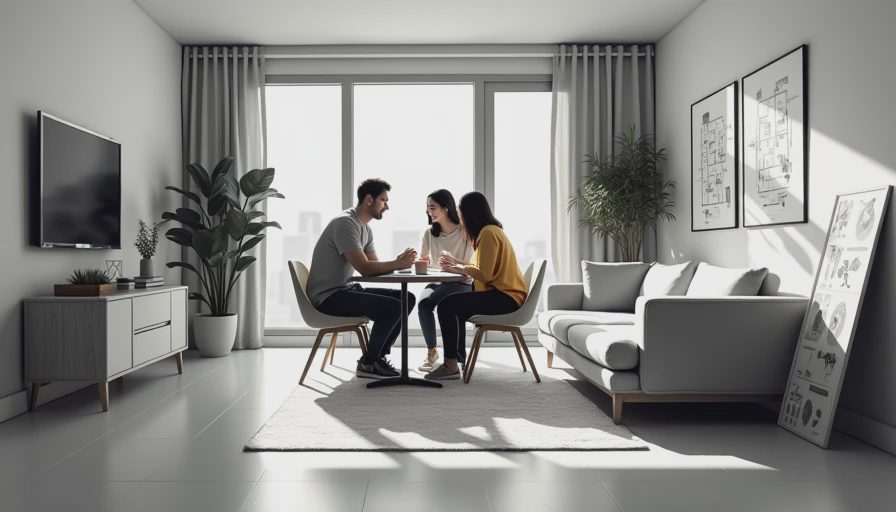
Not every house needs a formal dining room that gets used six times a year. In some Greenville starter homes, the smarter move is to keep the room but make it flexible enough for homework, tax prep, or a work-from-home setup during the week. In a larger house, especially one with a breakfast area and an open kitchen, the room can stay dedicated to hosting without feeling wasted.
That is where a dining room renovation earns its money: it should support the way your family lives now, not the way a listing photo wants it to look. A room with a good light fixture, a strong paint color, and furniture that fits will sell better and live better than a room packed with expensive but awkward details. Buyers may not name every upgrade, but they can feel when a room works.
A simple pre-spend check before you order anything
Before I spend another dollar, I measure the room, the table, the rug, and the walking space. I check whether the chandelier can be moved without major drywall work. I look at the trim against the rest of the house so I am not creating a one-room style island. I decide whether the floor needs repair now or can wait until the next phase. And I keep one contingency line in the spreadsheet, because every old house likes to surprise you once the baseboards come off.
If you are planning a dining room renovation, that is the part worth copying. Spend where the eye lands first, fix the layout before you buy decor, and write every number down. Measure twice, cut once, write it down.
Comments
No comments yet — be the first to share a thought.