
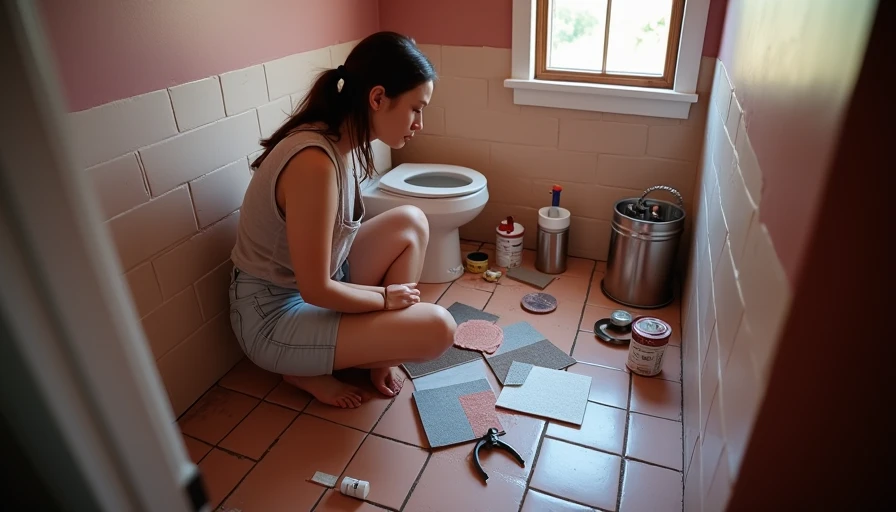
How to Renovate Small Bathroom on a Budget Without Wasting Money
Renovate small bathroom on a budget with real costs, DIY priorities, contractor warnings, and practical upgrades from a renovation pro in Greenville for...
If you want to renovate small bathroom on a budget, start with the numbers before you start swinging a hammer. A small bathroom can look like an easy weekend project, but plumbing surprises, tile mistakes, and poorly planned storage can turn a $3,500 refresh into a $9,000 problem. I know because I have made several of those mistakes in houses around Greenville, South Carolina.
My most recent small-bathroom budget was $4,860. That included a new vanity, toilet, lighting, paint, flooring, fixtures, and a plumber for one water-line change. I kept the existing tub and moved no major plumbing. That last decision saved more money than any sale-priced faucet.
Set a realistic small-bathroom budget
Before choosing finishes, divide the project into three buckets: labor, materials, and contingency. For a basic 35- to 50-square-foot bathroom, a cosmetic update often lands between $2,500 and $5,500 when the layout stays the same. A more complete renovation with new tile, waterproofing, fixtures, and professional labor commonly reaches $7,000 to $14,000.
For my spreadsheet, I assigned $1,050 to fixtures, $1,300 to tile and flooring, $900 to labor, $410 to paint and trim, and $700 to contingency. The contingency is not decorative padding. It covers rotten subfloor, corroded shutoff valves, missing blocking, and the $180 mistake you discover after opening the wall.
When you renovate small bathroom on a budget, protect the expensive parts first. Keep the toilet drain, shower valve, and sink location where they are. Changing a vanity from one wall to another can require new supply lines, drain work, drywall repair, and a permit depending on the job and local rules. A $200 design change can easily create $1,500 in downstream work.
Spend money where water can do damage
The least exciting products deserve the most attention. Use a proper waterproofing system around the shower, install a quality wax or wax-free toilet seal according to the manufacturer, and replace questionable supply lines while the room is open. I would rather buy a plain $250 toilet and spend extra on reliable waterproofing than install a designer toilet over a soft floor.
For a shower surround, sheet panels or a simple tiled system can be less risky than complicated mosaic work. Small tiles create more grout joints, more cuts, and more opportunities for an uneven surface. If you tile the floor yourself, use a cement-based backer board or approved uncoupling membrane where appropriate, follow the installation instructions, and check the floor for flatness before setting tile.
Ventilation also matters. A properly sized exhaust fan helps control moisture, peeling paint, and mildew. A basic replacement fan may cost $100 to $250, while installation can add several hundred dollars if the duct route is difficult. Do not vent a bathroom into an attic just to finish faster. That moves the moisture problem somewhere you cannot see it.
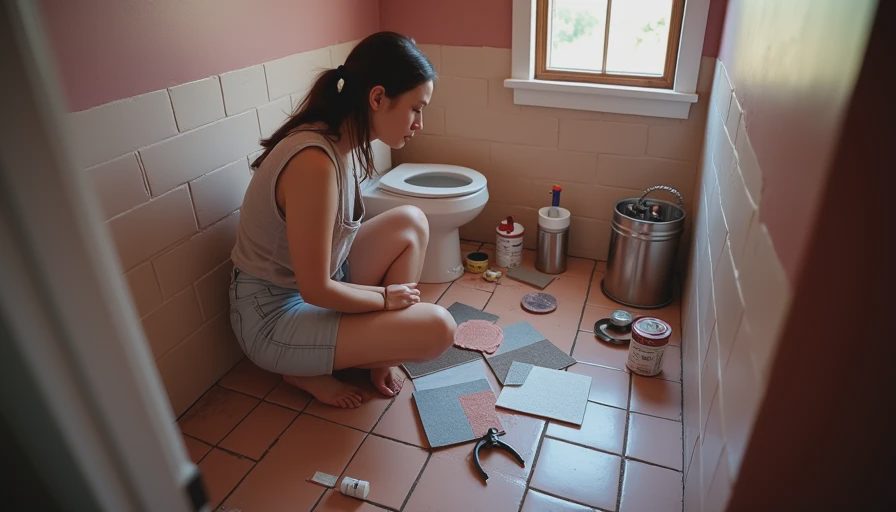
Choose upgrades that look expensive
The best way to renovate small bathroom on a budget is to make a few visible changes instead of buying six average upgrades. A 24- to 30-inch vanity, a framed mirror, a new light fixture, and fresh wall color can change the room more than an expensive towel warmer.
I used a $310 vanity with a drawer, a $95 brushed-nickel faucet, and a $140 medicine cabinet. The mirror cabinet solved a storage problem without consuming wall space. For lighting, I chose a damp-rated three-light fixture for about $85 and placed it over the mirror rather than relying on one ceiling bulb.
Keep the finish families simple. Chrome, brushed nickel, and matte black can all work, but mixing too many finishes makes a small room look assembled from leftovers. Pick one primary metal and repeat it on the faucet, shower trim, cabinet hardware, and towel hooks. Paint is another high-return purchase; one gallon of quality bathroom paint usually costs far less than replacing perfectly serviceable tile.
Decide what to DIY and what to hire out
DIY demolition, painting, hardware installation, and simple flooring can save $800 to $2,000. Removing an old vanity is usually manageable if you shut off the water, disconnect the trap, protect the floor, and avoid cutting hidden wiring or plumbing. Keep a shop vacuum nearby. Mine is named Dusty Springfield, and it has prevented more arguments than any finish sample.
Electrical work, gas work, major plumbing changes, and shower waterproofing deserve more caution. A licensed professional is often cheaper than repairing a leak behind finished tile. If you hire out one task, hire out the task that can create concealed damage. Ask for a written scope that identifies who supplies materials, who handles debris, and whether permits or inspections are included.
Get at least two estimates, but compare the work line by line rather than choosing the lowest total. One bid may include waterproofing and disposal while another only includes labor. That difference can explain a $1,200 gap without either contractor being dishonest.
A practical order of operations
When I renovate small bathroom on a budget, I use this sequence:
- Photograph the room and measure every wall, door swing, fixture, and window.
- Confirm the layout and locate shutoff valves before ordering anything.
- Build a written materials list, including fasteners, shims, trim, caulk, and disposal costs.
- Order long-lead items such as the vanity, toilet, shower trim, and special tile.
- Shut off water and electricity, then complete careful demolition.
- Inspect framing, subfloor, wiring, supply lines, and ventilation before closing walls.
- Complete plumbing and electrical rough-in before installing surfaces.
- Waterproof the wet area, install flooring, and protect finished work with cardboard.
- Install the vanity, toilet, mirror, lights, hardware, and trim.
- Test every fixture, check for leaks, and photograph shutoff locations for later reference.
The sequence prevents a common mistake: installing a new floor and then damaging it while moving a heavy vanity. It also makes missing parts obvious before the bathroom is unusable.
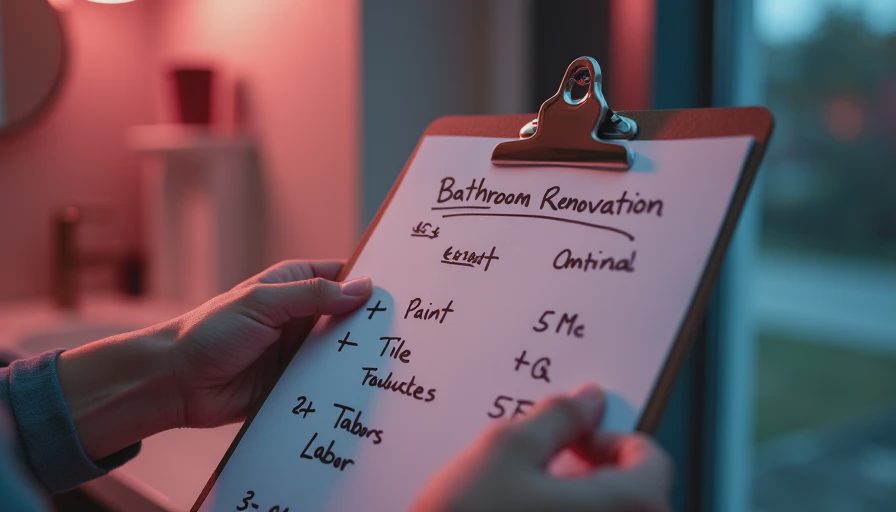
Where budget bathroom plans usually fail
The first failure is ordering before measuring. A vanity that is 1 inch too deep can block a door or crowd the toilet. The second is ignoring transitions. New flooring may sit higher than the hallway, requiring a reducer or a small trim adjustment. The third is treating caulk as a substitute for waterproofing. Caulk seals a joint; it does not make a shower assembly waterproof.
Another budget trap is buying the cheapest faucet or supply line. Replacing a $45 faucet after two years costs more than buying a dependable midrange model initially, especially when you count the time spent underneath the sink. I do not insist on luxury brands, but I do read warranty terms and reviews for repeated leak complaints.
If the room has a soft floor, persistent odor, active leak, or signs of mold beyond a small surface area, pause the cosmetic plan. Find the source first. Covering damage with new flooring is not a renovation strategy; it is an invoice scheduled for later.
Final numbers and the short version
My $4,860 project finished at $5,190 after replacing a corroded angle stop and adding a better exhaust grille. The room gained storage, brighter lighting, a clean floor, and a more reliable shower without moving the plumbing. That is the result I want from a budget renovation: fewer surprises, not the most expensive materials in the showroom.
To renovate small bathroom on a budget successfully, keep the layout, spend on waterproofing and ventilation, choose a small number of visible upgrades, and reserve cash for the walls and floor after demolition. Make a materials list before shopping, compare contractor scopes, and leave yourself enough time to fix mistakes correctly.
Measure twice, cut once, write it down. Your spreadsheet will not make the tile cuts for you, but it will tell you whether the mistake is affordable before you make it.
Comments
No comments yet — be the first to share a thought.