
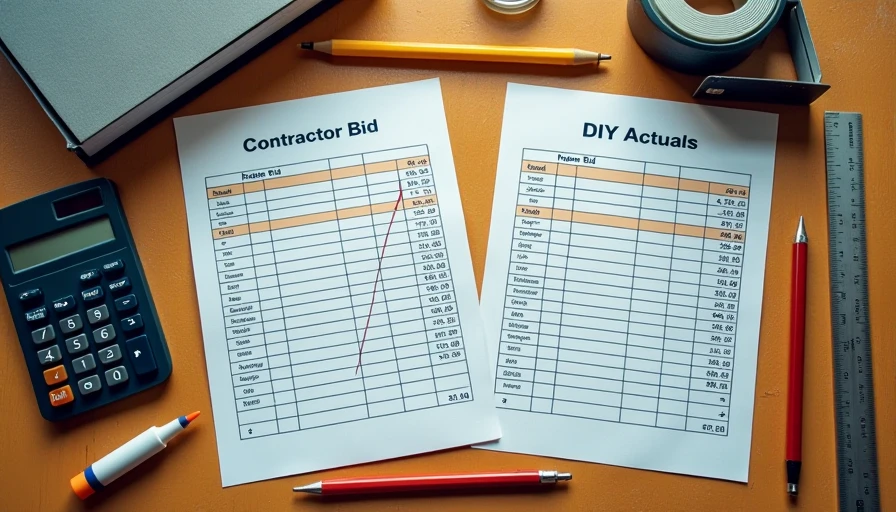
Contractor Bids vs. DIY: A Room-by-Room Cost Breakdown
Real side-by-side numbers: what contractors bid versus what DIY actually costs room by room in a Greenville renovation—labor, markup, and where the savings disappear.
The Question Every Homeowner Eventually Asks
“Should I just hire it out?”
I get that question from neighbors, from clients of the handyman business, and from myself at 9 p.m. when I’m still sanding drywall dust out of my hair. The honest answer is never a simple yes or no. It depends on the room, the task, your skill, your available time, and how much you value evenings and weekends.
Here is the way I break it down on every project: a room-by-room look at typical contractor bids in the Greenville area versus the real DIY cost when I do the work myself. These are 2026 numbers drawn from recent bids I’ve seen, invoices from my own jobs, and the living spreadsheet on the current house.
Living Room (Current Project)
Contractor-style bid range (labor + materials, mid-grade finishes):
$9,500–$13,000
That usually includes demo, drywall repair or replacement, paint, basic trim, and new flooring install. It rarely includes the surprises we already found (soft subfloor, old newspaper insulation).
My DIY actuals so far + projected finish:
Materials only: heading for roughly $2,800–$3,400
My labor: $0 on the spreadsheet (but very real in sore knees and lost Saturdays)
Savings on paper: $6,000–$9,000
Real cost of those savings: three weeks of evenings and weekends, plus the learning curve on drywall finishing.
For this room the DIY route still makes sense because the scope stayed manageable and I already owned the tools. If the ceiling had needed full replacement or the framing had been compromised, the math would have flipped.
Kitchen (Next Up)
Typical mid-range contractor bid (semi-custom cabinets, quartz, mid-tier appliances, labor):
$38,000–$52,000
My planned DIY-hybrid approach:
Materials + selected hired trades (plumbing rough-in check, possible electrical): $28,000–$34,500 including 20% buffer
Where the difference lives:
I will demo myself, paint myself, and handle the simple installs. I will not hang the cabinets or fabricate the counters. Those two line items alone are where most of the labor markup sits, and they are also the places where mistakes are expensive and visible.
Bathroom (Future)
Contractor bid for a full mid-grade bath remodel:
$14,000–$22,000
Realistic DIY-hybrid:
$8,500–$12,000 if I do demo, paint, flooring, and vanity install, and hire out the shower pan and any moving of supply lines.
Bathrooms punish inexperience. Waterproofing mistakes show up months later as mold. I DIY the cosmetic layers and pay for the wet work when the risk is high.
The Hidden Line Items Contractors Carry (and You Don’t See)
Overhead and insurance
Markup on materials (often 15–25%)
The cost of their time to bid, schedule, and manage
Warranty buffer
When you DIY you eliminate most of that, but you also eliminate the warranty and the ability to blame someone else when the paint sheen is wrong.
When DIY Stops Being Cheaper
The task requires a license or inspection you cannot pull yourself
The learning curve will cost more in redos than the labor savings
Your available time is already spoken for by work and family
The job involves structural, gas, or complex electrical work
I still hire out anything that can flood the house, burn the house, or fail an inspection. Pride is not a line item I am willing to overfund.
How I Decide Room by Room
List every task.
Price materials honestly.
Get at least one real contractor bid for the whole scope.
Estimate my hours at a realistic pace (not the YouTube speed).
Decide whether the dollar savings are worth the calendar cost.
On the living room the answer was yes. On the kitchen the answer is partial. On the main bathroom the answer will probably be “hire the wet work, DIY the rest.”
The Spreadsheet Does Not Lie
Every room on the current house has both a “full hire” column and a “DIY-hybrid” column. I update both as bids come in and as actual receipts land. The difference is the real number I use to decide, not the optimistic number I wish were true.
Measure twice. Cut once. Write it down.
The living room is still weeks from finished, but the cost comparison is already clear. Next time a bid lands in your inbox, you will have a framework that is more useful than a gut feeling. The ledger stays open.
Comments
No comments yet — be the first to share a thought.