

How to Pay for a Home Renovation Without Losing Your Budget
Learn how to pay for a home renovation with a realistic budget, financing options, cash-flow plan, and safeguards against costly surprises before work starts.
The short answer to how to pay for a home renovation is not “put everything on a credit card and hope the backsplash works out.” I have renovated four houses, kept receipts for all of them, and still managed to miss a $2,400 electrical problem in my current kitchen budget. Renovations are usually funded with some combination of cash, home equity, a renovation loan, or credit. The right mix depends on your project size, available equity, interest rate, and how much monthly payment you can carry without making family life miserable.
My first rule is simple: price the work before choosing the money. A $12,000 bathroom refresh and a $125,000 addition are not financing the same way. Start with a written scope, three contractor estimates where practical, material allowances, permit costs, and a contingency reserve. For an older house, I use 15 percent. For a straightforward cosmetic project, 10 percent may be enough. Measure twice, cut once, write it down.
Build the renovation number before borrowing
Before deciding how to pay for a home renovation, separate the budget into four lines: labor, materials, permits and design, and contingency. This prevents a common mistake I made on my first flip: treating the contractor’s $28,000 kitchen quote as the total. Cabinets, counters, flooring transitions, a dumpster, inspections, and the temporary meals added another $9,600.
For a typical Greenville-area project, a modest bathroom can land around $15,000 to $30,000 when plumbing stays put. A kitchen with stock cabinets, midrange appliances, and professional installation often runs $35,000 to $65,000. Those are planning ranges, not promises, but they are more useful than a fantasy number copied from a renovation show.
Create a cash-flow calendar as well as a total budget. Contractors may request a deposit, progress payments, and a final balance. Materials might require payment before installation. If your project lasts four months, you do not need the entire amount in your checking account on day one, but you do need to know when each dollar leaves.
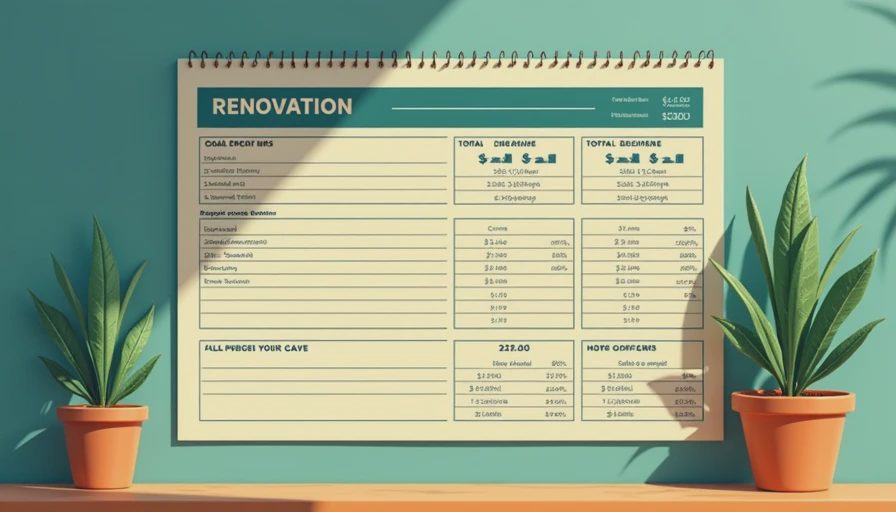
I keep a spreadsheet with columns for estimate, committed cost, paid amount, and actual cost. The “committed” column matters because a signed cabinet order is already a bill, even if the cabinets are still sitting in a warehouse.

Paying with cash and savings
Cash is the cheapest funding source because it has no interest, origination fee, appraisal charge, or monthly statement. It also gives you leverage when buying materials and protects you from a payment that survives long after the new flooring stops looking new. For smaller work, I prefer saving a dedicated renovation fund and paying invoices from that account.
Do not drain every dollar, though. Keep an emergency reserve separate from the renovation money. A broken water heater, job interruption, or insurance deductible does not care that your bathroom tile has already been delivered. I would rather delay a vanity upgrade than leave the household with no accessible cash.
Cash works especially well for projects completed in phases. You might pay for demolition and framing now, save for cabinets next, and postpone the deck until spring. The downside is schedule drift and possible price increases. If a project is exposed to weather or requires several trades, stretching it over a year can create more disruption than it saves.
Home equity loans and lines of credit
A home equity loan provides a lump sum and usually a fixed interest rate. That makes the payment predictable, which is useful when the contractor has a firm price. A home equity line of credit, or HELOC, lets you draw money as needed and commonly carries a variable rate. It can fit a renovation with uncertain timing, but the payment can rise when rates change.
Both products use your home as collateral. If you stop making payments, foreclosure is a real risk. That is why I would not borrow the maximum amount a lender offers simply because the online calculator approves it. Leave room for the project to run over budget and for normal household expenses to increase.
Lenders typically review income, credit, existing debts, and available equity. Closing costs can include an appraisal, title work, and lender fees. Ask whether the rate is fixed, how draws work, when repayment begins, and whether there is a minimum draw or early-closure charge. Compare the total cost, not just the advertised rate.
Renovation loans and cash-out refinancing
A renovation loan can combine the purchase or refinance of a home with improvement funds. FHA 203(k) loans and Fannie Mae HomeStyle loans are examples, although each has detailed eligibility, documentation, contractor, and inspection requirements. These products can make sense for a major renovation, especially when the home needs substantial work, but they are rarely the fastest option for replacing cabinets next month.
Cash-out refinancing replaces your current mortgage with a larger one and gives you the difference in cash. It may simplify payments, but refinancing can be expensive if your existing mortgage rate is much lower than current rates. You also restart or extend mortgage amortization. I would run the numbers on total interest over the full loan term, not just the new monthly payment.
An appraisal may influence how much equity you can access. From my old appraisal work, I know that a $40,000 renovation does not automatically add $40,000 to market value. Buyers pay for useful condition and desirable features, not every receipt in your folder. A new roof or functional kitchen may help value; custom finishes often return less than they cost.
Credit cards, personal loans, and payment plans
Credit cards are convenient for appliances, small material purchases, and rewards, but ordinary interest can become punishing when a balance rolls over. A $6,000 appliance purchase at a high annual percentage rate can produce hundreds of dollars in interest before the project is finished. Use a card only when the payoff plan is already in the spreadsheet.
A promotional balance-transfer or 0 percent introductory purchase offer can reduce interest, but read the expiration date and deferred-interest language carefully. Missing the payoff deadline can turn a useful tool into an expensive one. Personal loans offer a fixed amount and fixed payment without placing your house directly as collateral, but rates and fees depend heavily on credit and income.
Store financing can look attractive for cabinets, windows, or HVAC equipment. Ask whether the promotion is truly 0 percent annual percentage rate or deferred interest. Get the cash price, financing price, payment schedule, and penalty terms in writing. I once accepted a “no interest” tool promotion without putting the payoff date on my calendar. Rhonda the miter saw was useful; the surprise finance charge was not.
A practical funding plan before demo day
Here is the process I use when deciding how to pay for a home renovation:
- Get a realistic scope and written bids.
- Add permits, delivery, temporary housing, storage, and cleanup.
- Add a 10 to 15 percent contingency reserve.
- Set aside emergency savings that will not fund the project.
- Use cash for the portion you can comfortably afford.
- Compare a home equity loan, HELOC, personal loan, or renovation loan for the remaining balance.
- Match the funding term to the improvement’s useful life. Do not finance a short-lived decor choice for fifteen years.
- Schedule payments against expected income and contractor milestones.
For example, a $42,000 kitchen with a $6,000 contingency could use $18,000 in savings and a $30,000 fixed home equity loan. That leaves the contingency available instead of spending every dollar before the first cabinet arrives. If the actual cost comes in at $44,500, the unused reserve covers the difference without another application.
The best answer to how to pay for a home renovation is usually a boring one: combine a protected cash reserve with the least expensive financing that fits your timeline. Get insurance and permits handled before work begins, verify contractor payment milestones, and save every invoice. A renovation should improve the house without quietly damaging your finances. My spreadsheet has never made a room beautiful, but it has prevented several ugly surprises.
Comments
No comments yet — be the first to share a thought.