
How I Budget: Spreadsheets, a 20% Buffer, and the 'Wife Tax'
The exact budgeting system I use on every renovation—spreadsheets, a hard 20% buffer, and the real cost of the “Wife Tax.” Numbers first, surprises second.
The Spreadsheet Is the Only Boss I Answer To
I used to appraise commercial properties for a living. That job trains you to distrust round numbers and pretty estimates. When I started renovating houses, the same habit came with me: every project gets a living spreadsheet before the first tool comes out of the truck.
This is not a fancy template I sell. It is a plain Google Sheet (and a printed copy that lives on a clipboard in the garage) with columns that have saved me from more than one financial ambush. Here is exactly how it works on the current house, and how it has worked on the three that came before it.
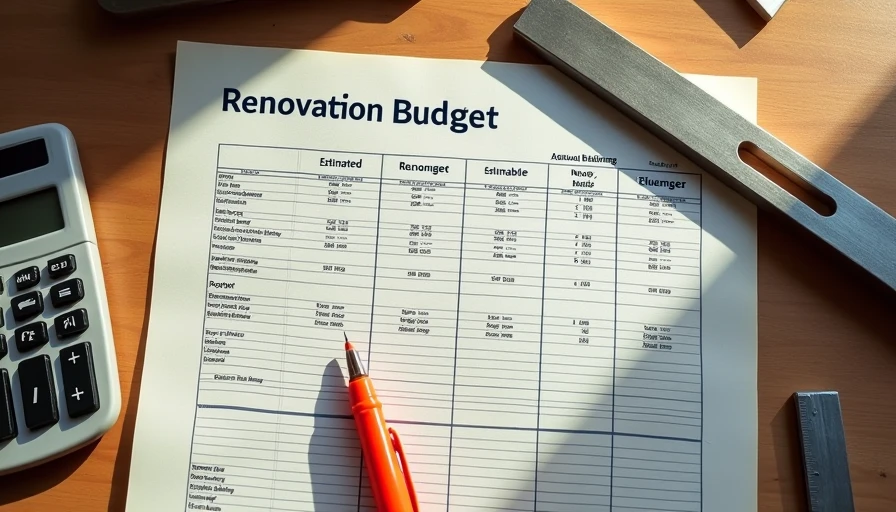
The Core Columns That Never Change
Every room or major phase gets its own tab. Across the top:
Line item description
Estimated cost
Actual cost
Difference
Notes (where the truth lives)
Down the side I break it into the same categories every time: demo & haul-off, structural/framing, electrical, plumbing, insulation, drywall & finish, flooring, paint & trim, fixtures & hardware, permits, and contingency.
I fill the estimated column before I buy a single thing. Then I update the actual column the same day the receipt hits my hand. No “I’ll enter it later.” Later is how numbers go missing.
The 20% Buffer Is Not Optional
I add a hard 20% contingency to every room total before I start. Not 10%. Not “I’ll be careful.” Twenty percent.
Why? Because walls hide things. Because material prices move. Because the one supply line you thought was fine turns out to be galvanized and full of corrosion. Because the dumpster that looked huge on Monday is full by Thursday and you need another haul.
On the living room the buffer is already working. Soft subfloor, newspaper insulation, extra drywall compound—none of it was catastrophic, but all of it would have blown a tighter budget. The contingency column is the reason I have not had to pause the job or put materials on a credit card.
I treat the buffer as spent until the room is finished and the final numbers are in. If anything is left, it rolls into the next room’s contingency. It never becomes “found money” for upgrades.

The Wife Tax (Officially Sanctioned)
Jenna and I have a running joke that became a budget line. The Wife Tax is the extra money that appears when you are standing in the store or the showroom and the slightly better version suddenly feels necessary.
It is the soft-close drawer slides instead of the basic ones. It is the faucet with the pull-down sprayer instead of the plain model. It is the paint color that costs six dollars more per gallon because it is the exact shade that makes the room feel finished.
I do not fight the Wife Tax. I budget for it. On most rooms I set aside 5–8% of the estimated total under a line simply labeled “WT.” When it gets used, it gets recorded. When it does not, it stays in contingency. The alternative is a series of small, untracked decisions that quietly destroy the spreadsheet.
How the Numbers Look in Practice
Living room original estimate (including 20% buffer): $4,200
Current actuals after two weeks: $757 materials + dumpster share
Projected final (still including remaining buffer): $3,800–$4,100
The kitchen tab is already built at $34,500 all-in. That number includes the buffer and a realistic Wife Tax allowance for cabinet hardware and the faucet. When the kitchen starts, every invoice will land in the actual column the same day.
I also keep a master dashboard tab that shows running totals across all rooms, percentage of buffer remaining, and a simple red/yellow/green status for each phase. It takes ten minutes a week to update and saves hours of “where did the money go” conversations later.
What I Refuse to Do
I do not use the contractor’s “allowance” numbers without checking them against real local pricing.
I do not hide change orders in my head. They go in the sheet the day they appear.
I do not let “it’s only another eighty dollars” decisions pile up unrecorded. Eighty dollars times twelve is a new appliance.
Why This System Works for a Normal Person
You do not need to be an ex-appraiser. You need a free spreadsheet, the discipline to update it the same day, and the humility to admit that houses are full of surprises. The 20% buffer is the humility. The Wife Tax line is the honesty about how decisions actually get made in a real household.
Measure twice. Cut once. Write it down.
The living room is still in progress and the spreadsheet is current. Next time a bid or a material run tries to surprise you, you will already have a place to put the number. That alone changes the entire job.
Comments
No comments yet — be the first to share a thought.