
4 Inch Foam Roller Kit: What It's Actually Good For
living room renovation before and after: see the Greenville costs, the mistakes, and the changes that actually made the room feel finished and valuable.
- Year
- 2026-09-03 17:45
- Category
- Tool Talk
Every renovation blog has a drawer full of $10 tools that promised more than they delivered. I don't usually write about them — but when a reader asked whether an 8-piece foam roller kit under $15 was worth buying before she started refacing her kitchen cabinets, I realized I'd already used one of these on my own trim work and never told you what I thought. So here's the receipt.
Verdict
A $13.27 foam roller kit with a 4.6-star average across 4,510 ratings, a #1 rank in House Paint Rollers, and both Amazon's Choice and Best Seller badges isn't hype — it's a genuinely capable small-project tool with one hard limit: at 4 inches wide, it's the wrong tool for painting an actual wall, and the right tool for almost everything smaller than one.
Why I Bothered Testing a $13 Roller Kit
Eight years of appraising houses taught me that "cheap" and "bad value" aren't the same thing, and neither are "expensive" and "worth it." A tool is worth what it saves you — in time, in wasted paint, in a redo. So when a reader asked about this kit, I didn't assume it was junk because of the price. I checked the actual failure data first, same as I would on a roof or a foundation.
The honest problem people run into is sizing. Standard rollers — 9-inch fabric ones from the big box store, or even the 3.5-inch ones one reviewer tried first — are built for open wall, not for cabinet doors, trim, or narrow rails. Fabric rollers on tight surfaces tend to apply paint unevenly or too thick. That's the gap this kit is actually built to fill, over in Tool Talk.
What's Actually in the Kit
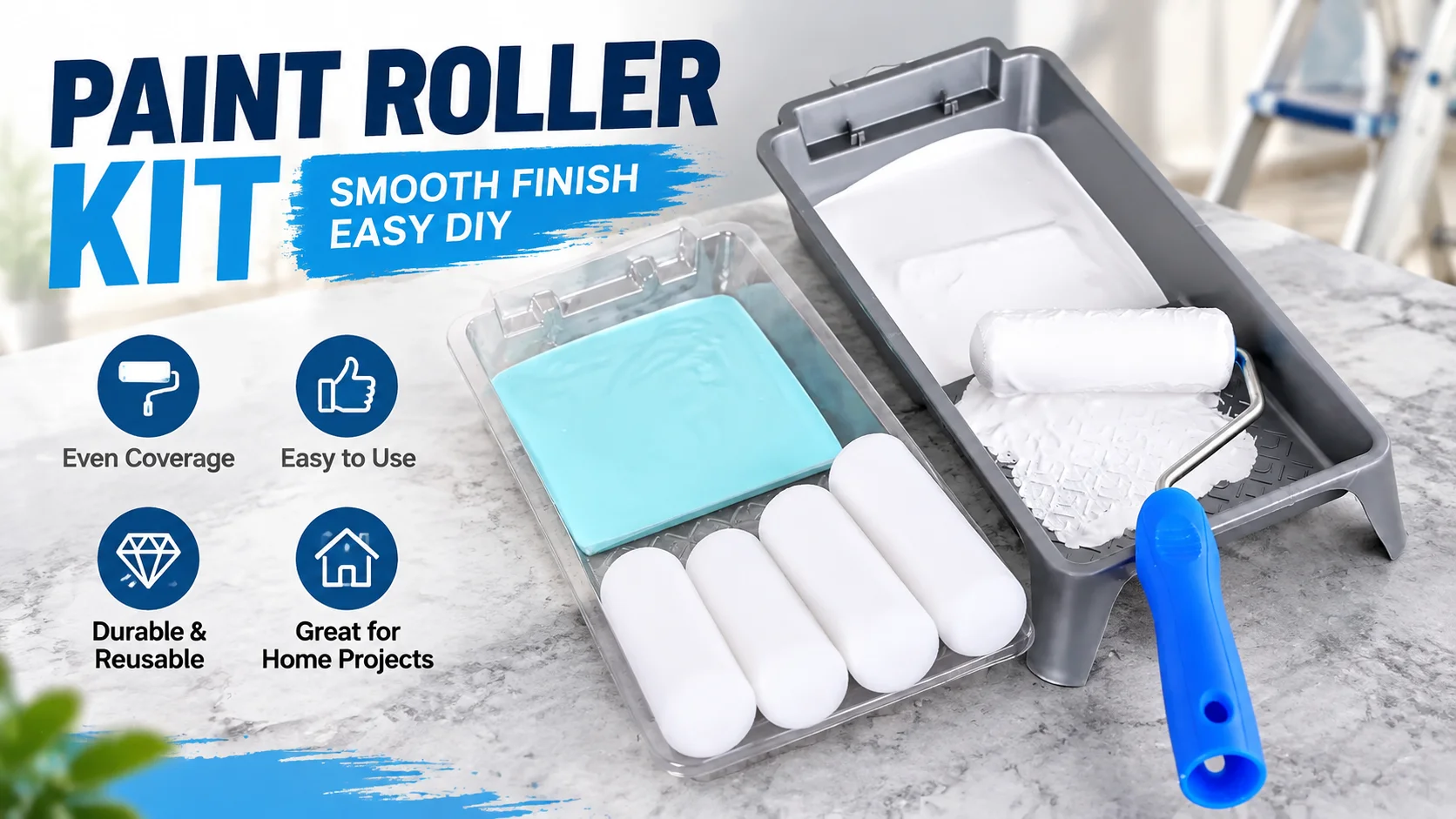
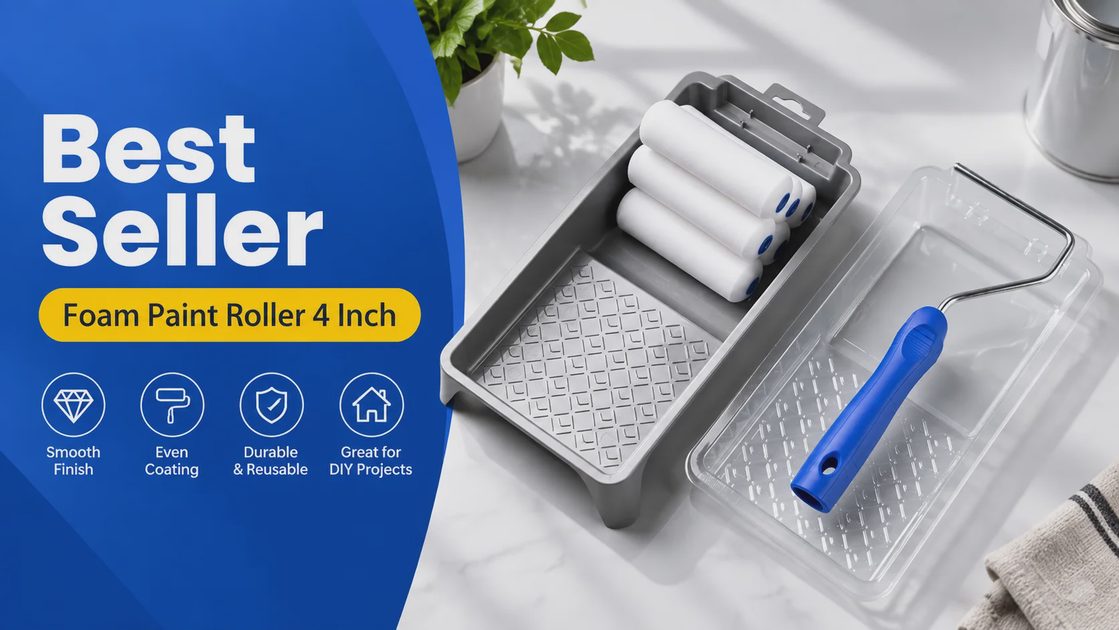
Eight pieces total: five high-density foam roller covers, one 4-inch roller frame, one deep-well paint tray, and one disposable tray liner. It's rated for water-based and oil-based paints, stains, varnishes, enamels, and primers — which matters, because a lot of cheap foam breaks down or goes gummy the first time it meets an oil-based enamel.
The frame has a solid cage that holds the foam cover without slipping mid-stroke, and the foam itself is dense enough to hold its shape instead of sagging into a lopsided teardrop after the second coat — which is the actual failure mode of the bargain-bin foam rollers this one is competing against.
High-Density Foam
Holds its shape and releases paint evenly — no sagging, no lint.
Any Paint Type
Rated for water- and oil-based paints, stains, varnishes, and enamels.
Secure-Grip Frame
Solid cage holds the cover in place — no slipping mid-stroke.
| Spec | Detail |
|---|---|
| Brand | Mister Rui |
| Roller size | 4 inches |
| Kit contents | 5 foam covers, 1 frame, 1 tray, 1 liner (8 pieces) |
| Paint compatibility | Water-based & oil-based paints, stains, varnishes, enamels, primers |
| Price | $13.27 |
| Item weight | 11.84 oz |
| Package size | 12.9 x 6.7 x 2.4 in |
| Rating | 4.6 out of 5 (4,510 ratings) |
| Recognition | Amazon's Choice, Best Seller, #1 in House Paint Rollers |
Where This Roller Actually Earns Its Keep
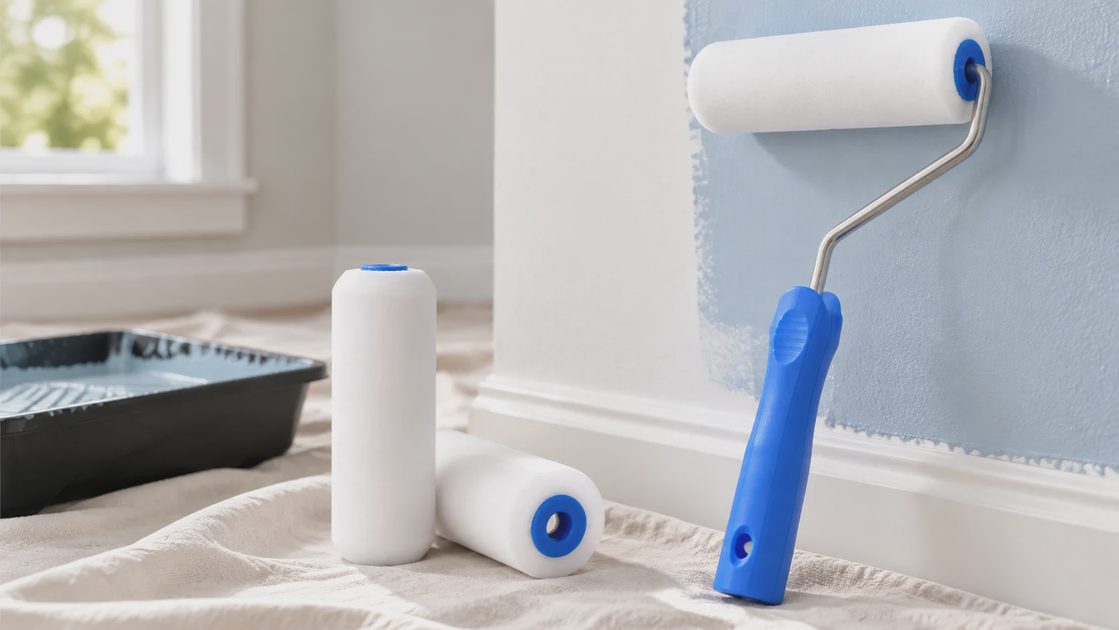
The recurring real-world case is kitchen cabinet refacing — I found three separate buyers who used this exact kit for that, including one with fifty years of painting experience who refaced 1971 laminate cabinets with a two-color base and a mica clear coat and called the value "a no-brainer" compared to Home Depot's pricier options. That tracks with what I saw doing trim work of my own: a 4-inch roller fits a cabinet door or a rail without you fighting the edges.
The second real case is narrow, awkward surfaces. One buyer needed to repaint an iron gate — horizontal and vertical bars — and tried standard 3.5-inch fabric rollers first. They failed: too wide, uneven, runny. Switching to this foam kit fixed it, with minimal runs and drips on a Rust-Oleum enamel finish. That's the same logic I'd apply to any trim and detail work in a living room reno — the tool has to match the surface, not just the paint.
Third case: small touch-ups. One buyer used a single roller for a touch-up job and had four spares left over. If you're patching a scuff instead of repainting a room, this is closer to right-sized than a full roller-and-tray setup from the paint aisle.
Where It Falls Short
Four inches of coverage is slow by design. If you're painting an actual wall or a full room, this kit will cost you hours a 9-inch roller wouldn't — it's simply not built for that job, and no amount of technique fixes a coverage-per-stroke problem. One buyer also flagged a real gap: the kit ships with one liner for five roller covers, so a multi-day project means either hand-washing the tray or buying extra liners separately. Small complaint, but a real one, and I'd rather tell you now than have you find out mid-project.

The Value Math
This listing has been live since September 2021 — over four years — and has collected 4,510 ratings at a 4.6 average, plus Amazon's Choice, Best Seller, and the #1 spot in House Paint Rollers. That's not a launch spike; that's a long tail of buyers still rating it years in, which is the same signal I look for before recommending any contractor bid, over in The Red Pen.
At $13.27 for eight pieces, buying this once costs less than one standalone quality frame plus a pack of premium 9-inch covers you don't actually need for a cabinet job — and cheaper still than a callback because a bargain fabric roller left stipple marks on a client's cabinet doors. That's the actual math, not the marketing one.
"I bought this for applying primer to a folding table that I wanted to epoxy... It left a nice smooth finish and it was reasonably priced. I don't think it would be very suitable for a large room-painting operation, since it covers only four inches at a time, but I think it's great for small areas and projects."
"I've been painting for over 50 years and I had to reface some kitchen cabs... The value for money is definitely here. Compared to Home Depot it's a no brainer and of better quality than some of hd's pricier offerings. Will get again if needed for sure."
"I reluctantly tried a set [of 3.5-inch fabric rollers]. They were a fail for me... I subsequently searched Amazon and found foam rollers and decided to try the inexpensive Mr. Rui Mini Foam Paint Roller Set... I was pleasantly surprised that I was able to easily prime the foam rollers and thereafter apply a smooth thin coat to the bars with minimal runs and drips."
"This is a nice inexpensive but well made product and worked awesome for me. Only had to use one roller for my touch up job which leaves me plenty as others come along. Great for quick jobs with minimal materials needed."
"Great quality foam roller. Firm and easy to use. Applies with a great even coat with no dripping on the side. Great on delicate projects. Highly recommend!! Best roller foam I have used."
"Great little set - everything you need to paint cabinets. I love the disposable pans and rollers. It makes cleaning up after painting a breeze. This kit was a great value and I will be purchasing again."

Can this roller actually handle oil-based paint, or just latex?
Both. The foam is rated for water-based and oil-based paints, stains, varnishes, enamels, and primers. Cheaper foam can go gummy or break down on contact with oil-based enamel — that's the specific failure mode buyers reported avoiding with this one, including on a Rust-Oleum enamel gate repaint.
Is a 4-inch roller too small for painting a whole room?
Yes, if the room means open wall. A 9-inch roller covers roughly five times the area per stroke. This kit is sized for cabinet doors, trim, rails, and touch-ups — reach for a standard roller for actual walls and ceilings.
How far will the five roller covers actually go?
One buyer used a single cover for an entire touch-up job and had four left over; another used most of the set refacing a full run of kitchen cabinets with a two-coat finish. Expect one cover per coat per project section as a rough rule.
Does the tray liner need to be replaced every use?
It's disposable, but rinseable for reuse if what you're painting cleans up easily. The kit ships with one liner for five covers, so budget for extras separately if you're running a multi-day project.
Will this work on narrow surfaces like railings or window bars?
Better than a standard-width roller will. One buyer's 3.5-inch fabric roller failed on iron gate bars — too wide, uneven — while this 4-inch foam kit applied a smooth, minimal-drip coat on the same type of narrow surface.
How should I prep a kitchen cabinet door before rolling on paint?
Degrease and lightly sand or deglaze to kill the sheen, wipe down dust, then prime before your color coats — the same sequence the buyer who refaced 1971 laminate cabinets used with this kit, running a two-color base under a mica clear coat.
Does the foam leave roller marks or a stippled texture?
No — that's the specific advantage of high-density foam over fabric nap: it releases paint evenly for a smooth, lint-free finish rather than the orange-peel texture a fabric roller nap can leave on cabinet-grade work.
Is this a reasonable first foam roller if I've only used fabric ones?
Yes — multiple buyers specifically noted this was their first time using a foam roller and had no learning curve: no drivers, no technique change, just a smoother result straight out of the tray.
Measure twice, cut once, write it down — and apparently, that applies to which roller you reach for too. This one's not the tool for your next full-room repaint, but for cabinets, trim, and anything narrower than a wall, it's earned a permanent spot in the bin. For more tools I've actually put receipts behind, that's what The Punch List is for — and if cabinets are next on your list the way they're next on mine, the small-room lessons from the laundry room carry over more than you'd think.
Comments
No comments yet — be the first to share a thought.